Articles by Scott Hebert

  1. What is TCP Window Scaling?

    Posted on in System Administration

    The original TCP specification included a window size no larger than 64 KB. This limitation was introduced by the 16 bit header that specified window size. To achieve the recommended 1 MB window size, RFC 1323 TCP extensions must be enabled. The rest of this post is a somewhat detailed …

  2. Debugging AGIs In Asterisk

    Posted on in voice

    Asterisk LogoTrying to debug an <acronym title="Asterisk Gateway Interface">AGI</acronym> in Asterisk can be a frustrating experience. The main problem is that STDERR only outputs to the terminal Asterisk was started from. In most cases, this means the terminal is the server console. If your Asterisk server is sitting …

  3. Redirecting User Email To Google With Postfix

    Posted on in System Administration

    Note: Now that Google is hosting email domains for free, it has become an interesting alternative for both new and old domains. As always, I've changed the names to protect those affected.

    Transitioning a domain to Google can be an arduous task. Once you have set up the domain with …

  4. Choosing Between RADIUS And TACACS+

    Posted on in Networking

    Deciding whether to use <acronym title="Remote Authentication Dial-In User Service">RADIUS</acronym> or <acronym title="Terminal Access Controller Access Control System Plus">TACACS+</acronym> for <acronym title="Authentication, Authorization, Accounting">AAA</acronym> functionality on a Cisco-based network seems straight-forward. After all, if the network uses Cisco, shouldn't the AAA …

  5. Postfix 2.3 and clamav-milter

    Posted on in System Administration

    Postfix LogoYou've probably been using Postfix and ClamAV for a long time. Prior to Postfix 2.3, you had to have an AMaViS daemon running to act as the glue between Postfix and ClamAV.

    As of version 2.3, Postfix now supports Sendmail 8 Milter protocol. Now you can cut AMaViS …

  6. Enabling Firefox's Session Restore

    Posted on in Software

    One of the features of Firefox 2 is Session Restore. By default, if Firefox needs to restart for an update (or crashes), it will restore your session to the state it was in at the time of restart. That means your tabs and windows will be just like you left …

  7. Server Naming Conventions

    Posted on in System Administration

    Every machine needs a name. As soon as the second server is ready to go, the name SERVER no longer seems like a great idea. When deciding how to name servers, there are two primary conventions: functional names and unique names.

    Functional Names

    Functional names take the job assigned to …

  8. UDLD In Radio-Based Metro Ethernet Rings

    Posted on in Networking

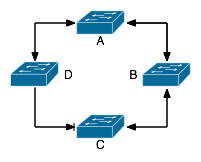
    <acronym title="UniDirectional Link Detection">UDLD</acronym> is a Cisco protocol designed to detect and disable unidirectional links in Ethernet (fiber or twisted-pair). In the case of a radio-based Metro Ethernet ring, UDLD goes the extra mile in preventing Spanning-Tree loops and user service interruption.

    4 Switches and Spanning-TreeIn this simple network of …

  9. VoIP Hairpinning Issues

    Posted on in voice

    When using Asterisk and a remote bank of <acronym title="Primary Rate Interface">PRI</acronym>s (or any other form of <acronym title="Public Switched Telephone Network">PSTN</acronym> connectivity for that matter), you may encounter an issue known as hairpinning. Hairpinning describes what happens when a call coming from …

Slaptijack's Koding Kraken